
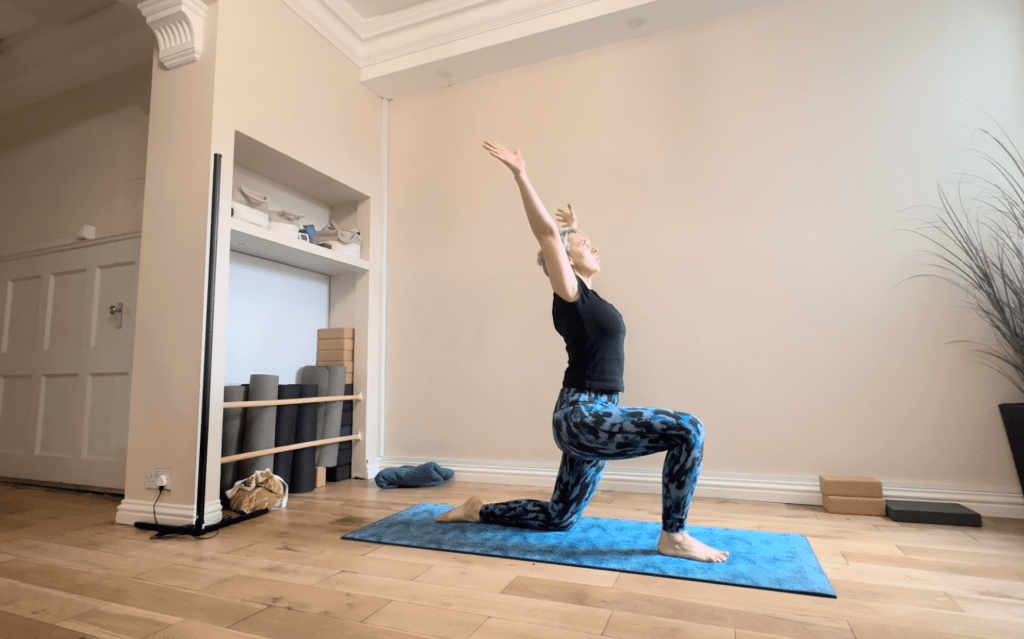
I loved my course when I trained as a yoga teacher. It gave me a good foundation in yoga philosophy, teaching and practice. However, I’ve often wondered why simple movement principles for osteoporosis aren’t a requirement for yoga teacher training.
This is at the forefront of my mind because I fractured my spine after my daughter was born due to a rare condition called Pregnancy Associated Osteoporosis (PAO). And, like many people with osteoporosis, I faced multiple hurdles before being diagnosed.
I tried different ways to aid recovery, from simple breathing exercises to routines with resistance bands and dumbbells but yoga in particular really worked for me. It helped release tension and gradually enabled me to trust my body again.
Around the same time, I was shocked to learn that one in two women over 50 fracture due to osteoporosis, according to the Royal Osteoporosis Society. The charity also reports that osteoporosis is the fourth biggest cause of disability and premature mortality in the UK, after cardiovascular disease, cancer and stroke. However, many people aren’t aware they have osteoporosis until after they’ve fractured, and once people have a fracture, it can significantly impact independence and quality of life.
For yoga teachers this is an important point because many yoga classes are attended by women in midlife and beyond – the years when bone density often starts to decline more rapidly due to hormonal changes around the perimenopause and menopause. Some people attending classes may therefore already have osteopenia or osteoporosis without actually knowing it.
Of course, yoga teachers can’t be expected to understand every health condition that people may have. Osteoporosis is particularly relevant, though, given how common it is among the people most likely to attend yoga classes. There are also a few key movement principles that could help reduce the risk of fracture for people with low bone density.
For example, hunching over (deep forward rounding of the spine) and certain twisting movements can increase the risk of vertebral fractures for those with osteoporosis. Some poses can also place substantial forces through the hips and might need adapting.
Despite years of campaigning by the Royal Osteoporosis Society and others, access to DEXA scans, diagnosis, prevention and post-fracture support remains limited. This is one reason why many people only discover they have osteoporosis after a fracture. The government’s promise of universal Fracture Liaison Services also hasn’t been delivered across the country.
Bone mass tends to peak around the age of thirty in women, with the pace of loss increasing during the perimenopausal and menopausal years. As a result, some women in their forties may already have osteopenia, the stage before osteoporosis, without realising it. Bone health also receives far less attention in public health messaging than many other aspects of healthy ageing, so there is a huge lack of awareness around this issue.
Yoga can be so beneficial to both mental and physical health, as it was, and is, for me. But people shouldn’t be potentially increasing their fracture risk when attending classes if they have osteoporosis.
We need much greater understanding in relation to this, given the prevalence of osteoporosis and a culture and healthcare system that could be doing far more to help prevent declining bone health before a fracture occurs.
I’m not an expert in osteoporosis myself but as someone who has experienced the challenges of it and who has become aware of what a significant public health issue it is, I’m mindful of how to move with lower bone density in mind. Knowing how to offer suitable options and cues in general yoga classes, and where to signpost students for further information, could make a real difference.
These principles are also relevant beyond yoga, whether lifting a child or picking something up from the floor. If greater awareness can help prevent fractures and support people to maintain independence, then surely it’s a conversation worth having.


Leave a Reply