
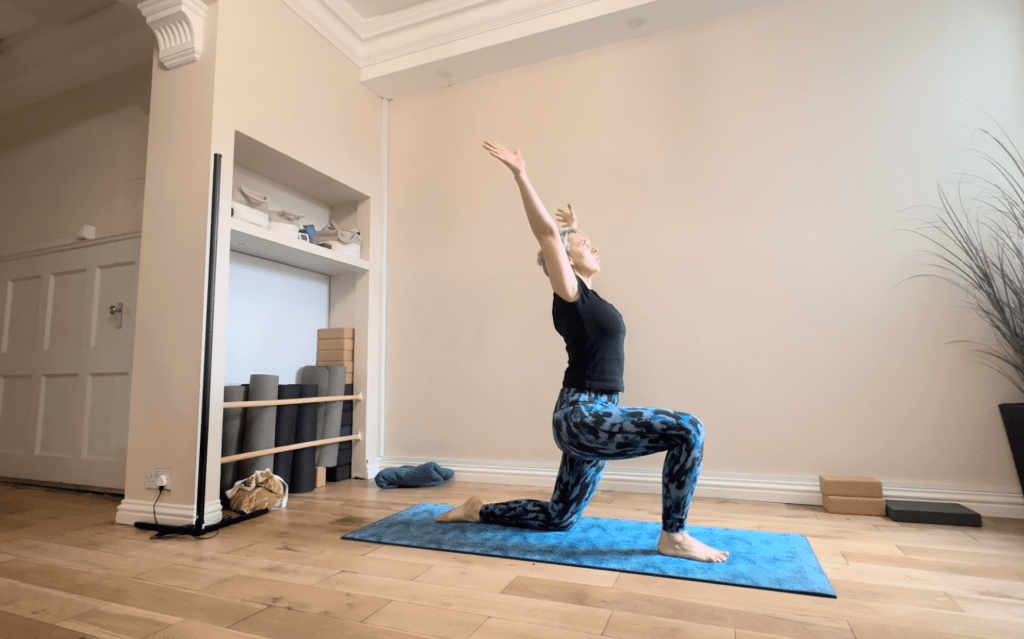
I had a wonderful teacher, Lucy, when I trained as a yoga instructor. The course was thoughtful, supportive and gave me a strong foundation in yoga philosophy, teaching and practice. I came away with great respect for the profession and for the care that many yoga teachers bring to their work.
However, I do have a question I’ve found myself returning to since qualifying: why isn’t osteoporosis routinely covered in foundational yoga teacher training?
This question is important to me because I developed Pregnancy Associated Osteoporosis (PAO), a rare condition that caused a fracture in my thoracic spine shortly after my daughter was born. Like many people with osteoporosis, I faced multiple hurdles before receiving a diagnosis while also adjusting to life as a new mum.
During my recovery I explored different ways to rebuild strength, mobility and confidence. Yoga played a pivotal role. It helped me reconnect with my body, release tension and gradually begin trusting movement again. It also made me think differently about osteoporosis and whether it deserves a more prominent place within teacher training.
I was surprised to learn that, according to the Royal Osteoporosis Society, one in two women over 50 will experience a fracture due to osteoporosis. The charity also reports that osteoporosis is the fourth biggest cause of disability and premature mortality in the UK, after cardiovascular disease, cancer and stroke. Yet awareness of the condition remains low until a fracture occurs.
This matters because many yoga classes are attended by women in midlife and beyond, the very years when bone density often begins to decline more rapidly due to hormonal changes around menopause. Some people attending classes may already have osteopenia or osteoporosis without knowing it.
Yoga teachers can’t be expected to understand every health condition that students may bring into the room. They’re not doctors, physiotherapists or osteoporosis specialists. But osteoporosis isn’t a rare condition, and there are a handful of simple movement principles that can help reduce fracture risk for people with low bone density.
For example, deep forward rounding of the spine and certain twisting movements can increase the risk of vertebral fractures for people with osteoporosis. Some postures may also place substantial forces through the hips and need adapting depending on an individual’s circumstances. In many cases, straightforward alternatives can be offered.
The challenge is that many people don’t know they have osteoporosis. Despite years of campaigning by the Royal Osteoporosis Society and others, access to diagnosis, prevention and post-fracture support remains inconsistent. The promise of universal Fracture Liaison Services has still not been realised across the country, meaning many people only discover they have osteoporosis after experiencing a fracture.
Nor is this solely an issue for older women. Bone density gradually declines throughout adult life, with bone loss often accelerating during the perimenopausal and menopausal years. As a result, some women in their forties may already have osteopenia, the stage before osteoporosis, without realising it. Bone health also receives far less attention in public health messaging than many other aspects of healthy ageing.
Osteoporosis stands out for me because of my personal experience but also because of its prevalence, the potential consequences of fracture, and the fact that greater awareness could make a huge difference.
When approached appropriately, yoga offers enormous benefits for both physical and mental wellbeing. It certainly did for me, and it continues to do so.
It would therefore be beneficial for all yoga teachers to have a basic awareness of osteoporosis and osteoporosis-aware movement principles. Knowing how to offer suitable options and cues, and where to signpost students for further information, could make a real difference.
This isn’t solely a conversation for yoga teachers either. Many professionals who support health, movement and wellbeing could benefit from greater awareness of osteoporosis and how simple adaptations can help people move more confidently.
These principles also extend well beyond yoga and into everyday life, whether lifting a child or picking something up from the floor. If greater awareness helps people reduce fracture risk, maintain independence and continue enjoying movement, then surely it’s a conversation worth having.
 Home
Home 
Leave a comment